Robert Manitow
Dr. DeathRobert Manitow is a physician whose limited appearances in the investigation expose a stark divide between Joanne Doss's unresolved medical history and his confident psychological explanation of her decline. His name appears on the referral form in a file documenting fifteen doctors' efforts to find a cause; when Alex Delaware reaches him by phone, he describes Joanne as having chosen to withdraw from life and insists that psychiatric treatment could have saved her.
Identity and Introduction
Before speaking with Robert, Alex has never met him or talked with him. Alex knows him only from silver-framed family photographs in Judy Manitow's chambers. When Robert answers the phone, he identifies the caller as Dr. Delaware and immediately asks who is calling, then curtly asks what Alex wants. The exchange introduces him through distance and abruptness: he is a familiar presence in the family photographs, but not someone Alex knows personally.
Joanne Doss's Medical History
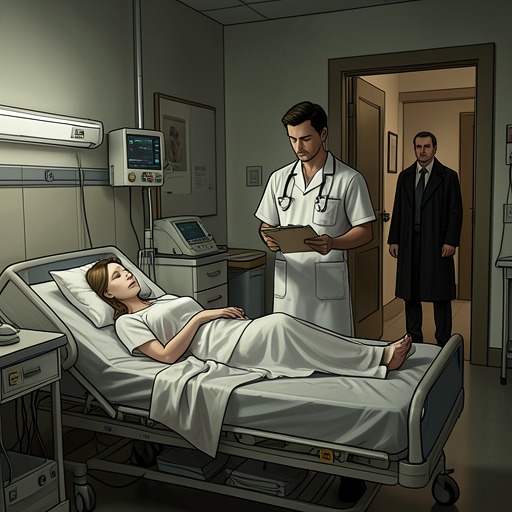
Robert's name appears on the referral form in Joanne's medical file, but the records show that fifteen other doctors also tried to determine what was wrong. They ordered blood tests, urinalysis, X-rays, CAT scans, PET scans, MRIs, and the lumbar punctures Richard Doss had described. The results repeatedly offered no explanation. The file's many investigations place Robert within a referral network, but the evidence does not establish that he personally conducted the tests or reached a medical diagnosis.
Richard's account supplies the breadth of Joanne's symptoms and the long course of her decline: joint pain, headaches, skin sensitivity, and fatigue, followed by social withdrawal, extended periods in bed, and extreme weight gain. He says doctors subjected her to an array of tests, including two lumbar punctures, without finding a reason for her condition. The discrepancy between that inconclusive record and Robert's certainty becomes central to how his judgment reads: an unresolved illness is recast as a psychological and moral failure.
Phone Call and Judgment
Speaking to Alex, Robert characterizes Joanne as psychologically disturbed and says she had dropped out of life and eaten herself to death. He calls the doctor who helped her die a quack and argues that Richard should have had Joanne committed. In Robert's view, a tricyclic antidepressant might have kept her alive and spared the children what followed. He presents this counterfactual with confidence even while acknowledging that he is not a psychiatrist; he says he could diagnose depression himself.
Robert also resists being questioned in a therapeutic manner. When Alex restates his claim about the Doss family's tendency to dramatize, Robert tells him not to bounce his words back as though he were on the couch. He then insists that the family exaggerates, likening their house to a place that should have included an amphitheater. The phone conversation ends abruptly: Robert wishes Alex luck with the child and says he has to go.
Narrative Role
Robert's brief role is less a clinical resolution than a competing interpretation. The records establish repeated negative findings, while Richard describes profound changes in Joanne's body and behavior; Robert reduces those changes to depression and a refusal to live. His proposed intervention—commitment and medication—remains hypothetical, not a demonstrated alternative that would have succeeded. By setting his certainty against a medical file that contains extensive testing but no cause, the narrative leaves the distinction between unexplained illness and psychological explanation unsettled.